The Feminization of The Internet
The algorithmic feed is demonstrably feminized.
It’s optimized for engagement, rewarding emotional display, visual stimulation, and social validation—traits that feed on community approval rather than inquiry.
This optimization relies on leveraging psychological traits such as agreeableness and capitalizing on neurological responses to social validation like likes and comments. The system rewards high-engagement content, exploiting manipulation techniques like "sadbait" and "rage-bait" because they trigger the stronger emotional responses.
The highly visual nature of this feed is reflected in demographics: visual/image-based platforms like Pinterest and Instagram are distinctively female-coded, exhibiting a 17+ percentage point gender gap compared to text-based platforms.
In contrast, when the algorithm is stripped away (when you sort chronologically by the people you follow), the internet reverts to its masculine-coded roots: text-driven forums, long-form argument, and technical exchange.
These earlier spaces, still reflected in platforms like Reddit (63.6% male) and Discord (66.6% male), privileged technical expertise, competition, and argumentative discourse.
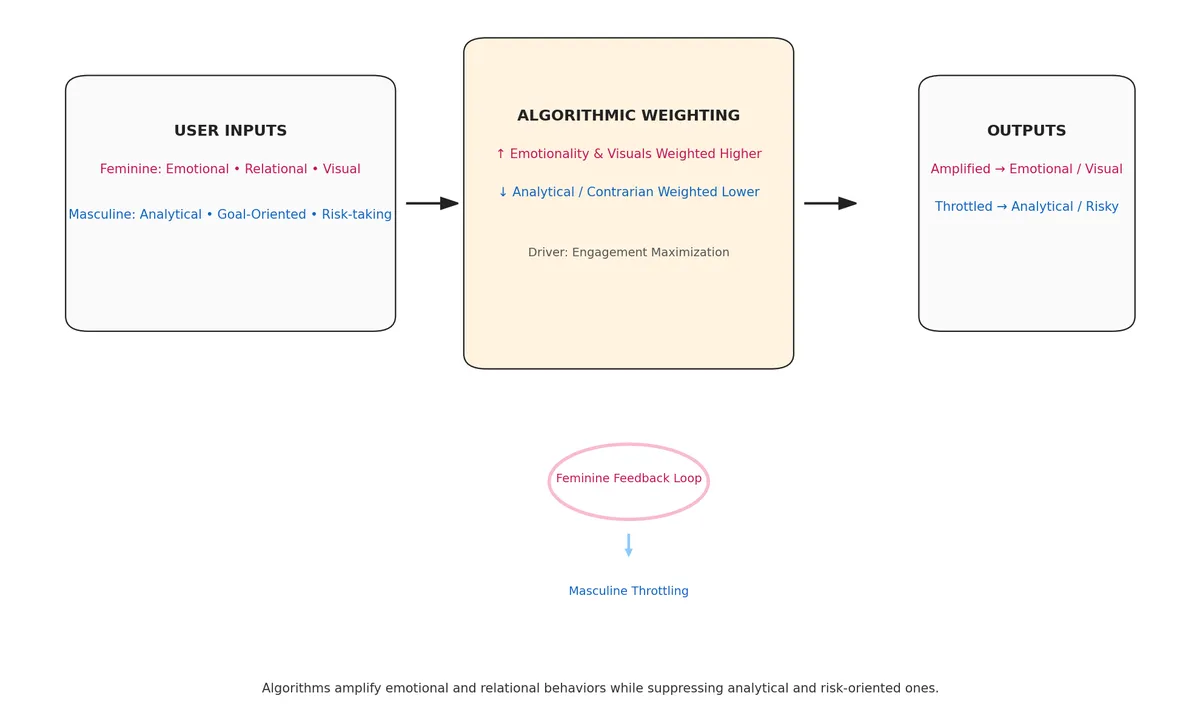
The unoptimized web is one of clarity, precision, and challenge; the optimized one is about performance, sentiment, and conformity.
This dynamic is reinforced by metrics: 90% of women report self-comparison on platforms versus 60% of men, while algorithms capitalize on visual leverage by promoting content such as female influencers' revealing photos.
Furthermore, content in the optimized feed relies on language highly coded for relationally, as women use emotional language (e.g., "bless," "scary") twice as often as men, and platforms exploit feminine tendencies toward homophily (connecting with similar others) for enhanced community engagement.
Something to think about.